Aircraft foundations
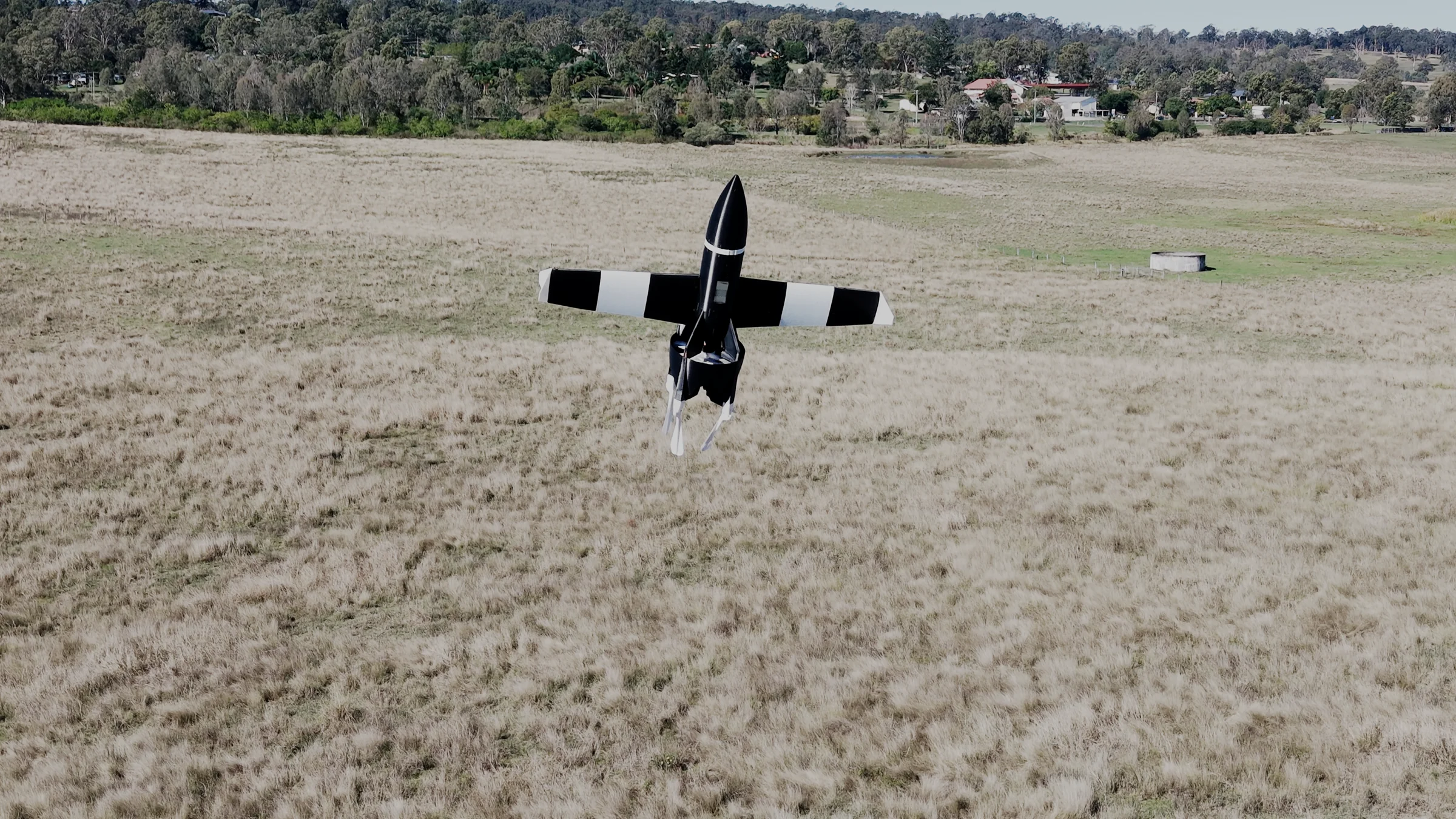
- 143 km/h cruise and 179 km/h maximum groundspeed
- 1 kg payload carried in flight
- 12.2 km autonomous sortie
- Direct launch, transition and soft vertical recovery
- Reusable aircraft with battery-change turnaround
AMMA 2026 · ICC Sydney · 5–8 November
AEROMed is being developed to move blood products, pharmaceuticals, diagnostic samples and critical medical supplies between distributed care locations. Its aircraft foundations are already demonstrated in flight.
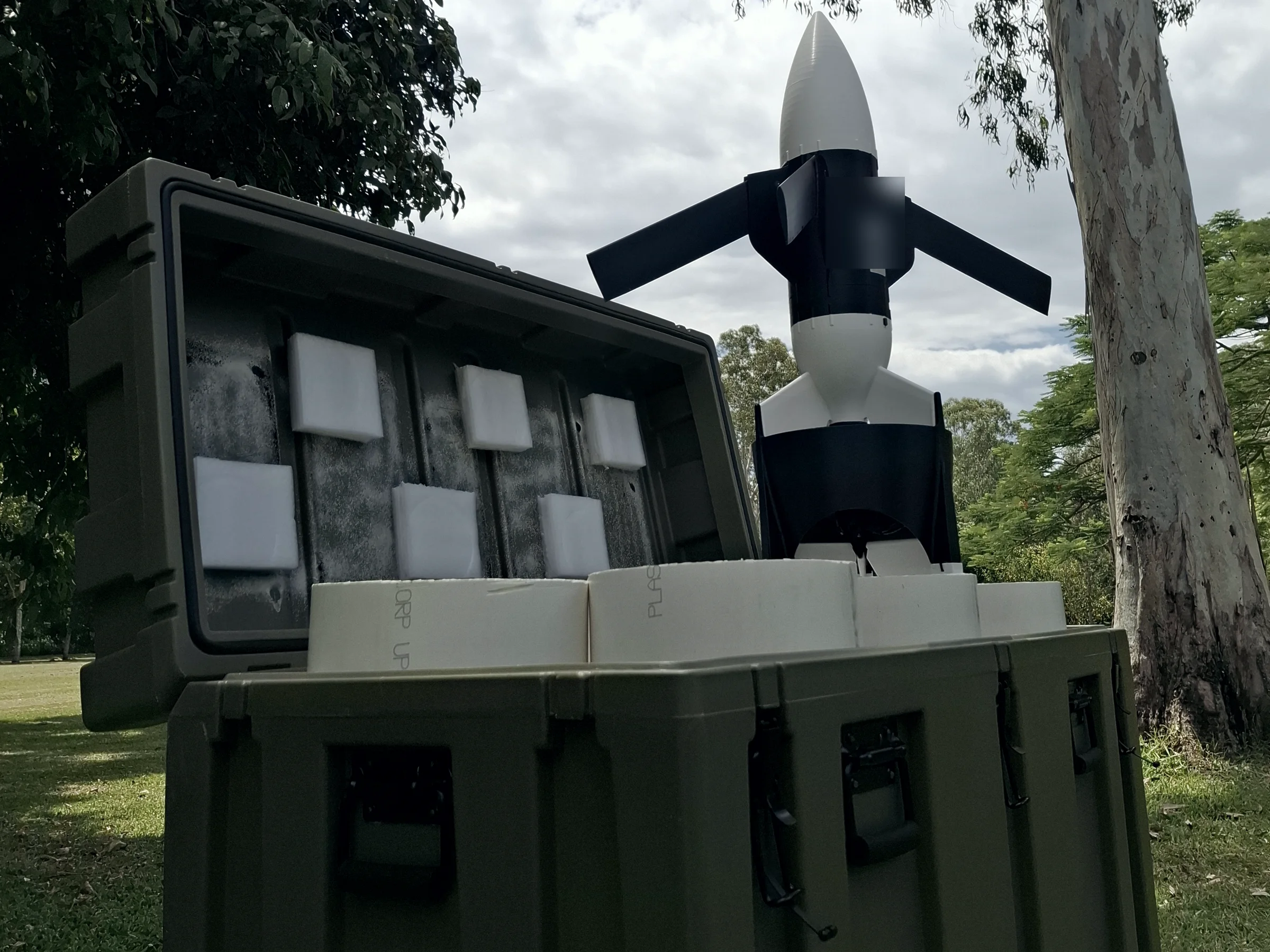
Joint workshop with Saab Australia. Static aircraft at the workshop. No flight demonstration at ICC Sydney.
The question is not whether a drone can carry a box. It is whether the right medical payload can move through the care pathway in time, within its handling requirements, without adding another specialist workload.
Concept of operations for discussion. Saab's modular Role 1 and Role 2F facilities provide the clinical setting for the joint workshop. The complete medical logistics system remains subject to co-design and evaluation.
AEROMed starts with a reusable aircraft that has demonstrated vertical launch, transition, high-speed cruise, autonomous flight and soft vertical recovery. Medical payload integration is the next layer of evidence.
Field workflow
The operating model begins with the medical payload and the receiving team. The aircraft is intended to absorb flight complexity, not transfer it to clinicians.
Use the workshop and conference session to test where rapid autonomous logistics would make a clinical difference, and what RFD and Saab would need to prove next.
Thursday · 5 November
Pre-conference workshopRFD and Saab Australia will examine how reusable autonomous aircraft and deployable healthcare facilities could connect distributed medical nodes. The session includes a static AEROMed aircraft.
Register for the workshopSaturday · 7 November · 14:00–14:20
Session 17 · Pyrmont TheatreEnhancing forward medical support through drone-enabled blood logistics
Presented by Amany Wahba, Saab Australia, and Dr Joni Sytsma, Rocket Fast Drones.
View the official programmeStart with the operating problem
Bring the payload, origin, destination, time threshold, thermal envelope and operating constraints. We will map the evidence already available, the gaps that remain, and a trial that would answer a real clinical logistics question.